HVAC Denver Experts: Surviving Colorado’s Wild Weather Swings
If you live along the Front Range, you know the drill: you’re wearing shorts on Monday and shoveling snow by Wednesday. While we’re used to the “wait five minutes and the weather will change” lifestyle, our home comfort systems aren’t always as resilient. Lately, these shifts have felt more like a climate rollercoaster than a seasonal transition. We are seeing brutal cold snaps followed by record-breaking heat waves that push local HVAC Denver systems to their absolute breaking point.
When the temperature drops 40 degrees in a single afternoon, your furnace or heat pump doesn’t just “turn on”—it goes into a high-stakes sprint. At Blue Valley Heating and Cooling, we’ve seen firsthand how these erratic patterns cause confusion, frustration, and unfortunately, unexpected repair bills for Denver homeowners. This guide is designed to help you understand the “why” behind system strain and how to protect your investment for the long haul.
The Science of Altitude: Why HVAC Denver is Different
Denver’s geography is unique, and it plays a massive role in how your heating and cooling equipment performs. Our high elevation (5,280 feet and above) means the air is significantly thinner than at sea level. This isn’t just a fun fact for baseball fans; it’s a mechanical hurdle for HVAC Denver engineers.
Thinner air contains less oxygen for combustion in furnaces and carries less “mass” to move heat in air conditioning systems. This means your blowers and fans have to move a much higher volume of air to achieve the same cooling or heating effect as a system in a coastal city. When you add a 50-degree temperature swing into the mix, the mechanical stress is compounded. Your system has to compensate for the lack of air density while fighting against extreme outdoor temperatures.
When we oscillate between heavy heating and sudden cooling, your system “cycles” more frequently. This constant starting and stopping—known as cycling—is the primary cause of wear and tear on motors, igniters, and control boards. If you’ve noticed your system struggling to keep up during these spikes, it might not be a total failure—it could just be overwhelmed by the sheer velocity of the temperature shift. For those whose equipment is older than 15 years, looking into a professional Air Conditioning Installation can ensure your home remains a sanctuary, regardless of the outdoor chaos.
The Cold Snap Crisis: Furnaces and Heat Pumps under Pressure
During a sub-zero cold snap, the margin for error in your heating system vanishes. A furnace that works perfectly fine at 30°F might suddenly fail at -10°F. This is usually due to “limit switches” or safety sensors. If a system is struggling with airflow—perhaps due to a slightly dirty filter or a blocked vent—it might operate “hotter” than it should. On a normal day, it stays just below the safety threshold. During a deep freeze, when the furnace runs for hours without a break, it crosses that threshold and shuts down.
We also see frequent issues with “short cycling” during cold snaps. This is where a furnace turns on and off rapidly. Many homeowners think this means the house is warm, but it’s actually the system’s way of screaming for help before a permanent failure occurs.
For those using modern electric or hybrid systems, the challenge is different. While heat pumps are incredibly efficient, they can struggle when the temperature drops rapidly unless they have a properly configured “auxiliary” or “backup” heat source. Ensuring your Heating Maintenance includes a calibration of these backup stages is the difference between a cozy night and a frozen pipe disaster.

The Heat Wave Headache: When ACs Give Up
Conversely, summer heat waves expose weaknesses in your AC’s refrigerant levels or electrical components. Many homeowners don’t realize that heat waves are just as taxing as freezes, if not more so. Air conditioners don’t actually “create cold”; they move heat from inside your house to the outside. When it’s 100°F outside, the “heat gradient” makes it incredibly difficult for the system to dump that heat.
Continuous operation during a “heat dome” event prevents the system from ever reaching its “rest” state. This leads to:
- Frozen Coils: If airflow is restricted even slightly, the refrigerant gets too cold and turns the condensation on your coils into a block of ice.
- Blown Capacitors: These are like the “batteries” that start your motor. In extreme heat, they are prone to popping, leaving you with a fan that blows air but a compressor that won’t start.
- Burned-out Compressors: The heart of your AC. If it runs for 18 hours straight in the baking sun, the internal oil can degrade, leading to a catastrophic (and expensive) failure.
The “Silent Killers” of Efficiency: Ductwork and Insulation
Your HVAC unit is only half the battle. Think of your furnace as the engine and your ductwork as the tires. If the tires are flat, the engine has to work twice as hard to move the car. If your ductwork is leaking or your insulation is thin, your expensive conditioned air is escaping into your attic or crawlspace.
In the Denver metro area, many older homes have ducts that were never sealed or were insulated with materials that have since degraded. This forces your system to run 20–30% longer than necessary. During a weather swing, that extra 30% of run-time is often what pushes a component to fail.
Furthermore, many Denver homes were built based on climate data from decades ago. As extremes become more frequent, an undersized system will run itself into the ground trying to reach a temperature it simply wasn’t designed to hit. Proper “Manual J” load calculations are essential for the modern Colorado home to ensure the equipment is sized for today’s extremes, not yesterday’s averages.
Why a HVAC Denver Maintenance Membership is Your Best Defense
We can’t control the Colorado clouds, but we can control how prepared our homes are. The most effective way to avoid a mid-blizzard breakdown is through consistent, professional upkeep. Our System Maintenance Membership is designed specifically for the Front Range climate.
Regular maintenance isn’t just about changing filters. It involves:
- Checking Heat Exchangers: Looking for tiny cracks that could leak carbon monoxide.
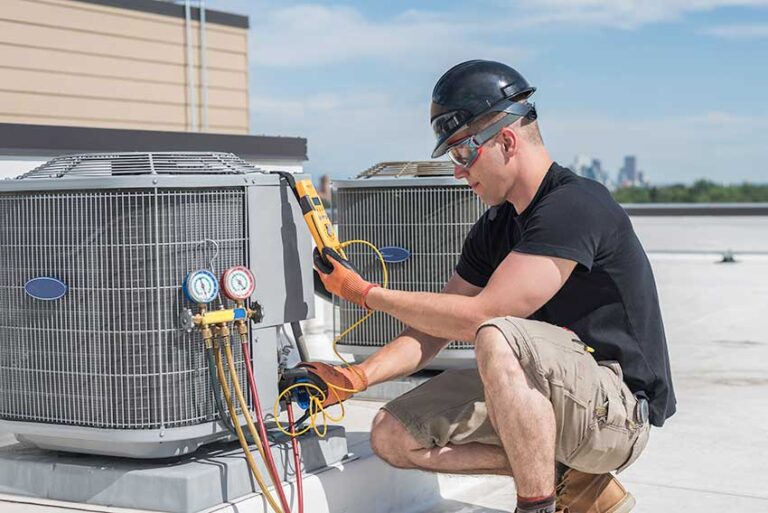
- Amp Draw Testing: Checking if motors are drawing too much electricity, which signals an impending failure.
- Cleaning Condenser Coils: Removing the “cottonwood fuzz” and dust that acts as a blanket, trapping heat in your AC.
- Calibrating Thermostats: Ensuring your “brain” and “brawn” are communicating correctly.
Think of it as an insurance policy for your peace of mind. It’s much easier (and cheaper) to fix a loose fan belt in a mild October than it is to source a proprietary motor in the middle of a January emergency.
Smart Controls: Using Technology to Fight the Swings
One of the best ways to manage Denver’s mood swings is through smart thermostats and zoning systems. Modern controls like the Nest or Ecobee allow your home to adapt to temperature drops in real-time.
Zoning is particularly effective in our local architecture. Many Colorado homes are multi-level with vaulted ceilings. In the summer, all the heat rises to the master bedroom; in the winter, the basement stays freezing. Instead of forcing one unit to work overtime to cool the whole house just to make the upstairs livable, a zoned system uses dampers to focus the “muscle” where it’s needed most. This reduces the total load on the equipment and extends its lifespan.
Choosing the Right Equipment for the “New Normal”
If your system is nearing the end of its life, don’t just replace it with the same model from 20 years ago. HVAC technology has leaped forward.
- Variable-Speed Blowers: Instead of being “all on” or “all off,” these systems can run at 30% or 50% capacity. This is perfect for Denver’s “in-between” days, providing constant, gentle airflow and superior dehumidification.
- Dual-Fuel Systems: These combine an electric heat pump with a gas furnace. The heat pump handles the mild days efficiently, and the gas furnace kicks in only when the temperature drops below freezing. It’s the “best of both worlds” for our climate.
- High-Efficiency Filtration: With the increasing frequency of wildfire smoke in Colorado, upgrading your filtration isn’t just about the machine—it’s about your health.
Warning Signs You Shouldn’t Ignore
Before a total breakdown happens, your system will usually send out “S.O.S.” signals. Being proactive can save you thousands.
- The “Thump” or “Squeal”: Unusual noises usually mean a mechanical part is fighting for its life. A squeal often points to a dying belt or bearing, while a bang could be an ignition delay.
- The Energy Bill Jump: If your costs spike significantly without a change in your habits, your system is likely working overtime to compensate for a hidden failure, like a refrigerant leak.
- Short Cycling: If the unit turns on for three minutes, turns off, and then repeats, it’s likely overheating or has a failing sensor.
- The “Ghost” Settings: If your thermostat says it’s 72°F but you’re shivering, your calibration or sensors are likely failing under the weather’s pressure.
Facing the Future with Confidence
Weather extremes are no longer a “once-in-a-decade” event in Denver; they are the new reality. Whether it’s a sudden October freeze that catches us with our sprinklers still on or a relentless July heatwave, your HVAC system is your home’s primary defense.
By staying proactive, investing in quality maintenance, and understanding the unique demands of the Front Range climate, you can keep your home comfortable and your energy bills predictable. At Blue Valley Heating and Cooling, we’ve spent decades learning the quirks of Denver homes. We’re here to help you navigate these changes with expert advice, local experience, and dependable service that stands up to whatever the Colorado sky throws at us.
FAQs about HVAC Denver
We get a lot of questions from our neighbors about how to handle our state’s unpredictable climate. Here are a few things every homeowner should know about managing their HVAC Denver systems.
Why does it feel like HVAC Denver service is so much more critical when the weather goes haywire? Our local homes have to deal with massive temperature swings—sometimes a 40-degree drop in a single afternoon. That kind of “weather whiplash” forces your system to pivot instantly, putting it under immense pressure. Regular service ensures your equipment is flexible enough to handle those sudden shifts from air conditioning back to heating without a major mechanical breakdown.
How often should I really have my HVAC Denver system inspected? While it’s tempting to “set it and forget it,” most HVAC Denver professionals recommend a checkup twice a year. Think of it like a seasonal prep: once in the spring to get ready for the summer bake, and once in the fall before the first big freeze. Catching a small, $50 part failure in October is much better than losing your heat on Christmas Eve.
What are the most common HVAC Denver problems you see after a big cold snap? Once the snow settles, our HVAC Denver technicians stay busy fixing ignition failures and worn-out blower motors. When it’s sub-zero outside, your system runs almost non-stop, which can cause older components to simply give up. We also see a lot of airflow restrictions where the system is working twice as hard just to move half the air.
Do heat waves hit HVAC Denver systems harder than systems in other states? They definitely do. Because we live at a higher elevation, our air is thinner, which naturally makes cooling less efficient than it would be at sea level. During a heat wave, an HVAC Denver system has to work overtime to move heat out of your house. That’s why keeping your coils clean and your filters fresh is so much more important here than in lower-altitude cities.
How does Blue Valley Heating and Cooling tackle these specific HVAC Denver challenges? We don’t just look at the equipment; we look at the environment. Our team lives and works here, so we understand the unique HVAC Denver conditions firsthand. We help you prepare for the “worst-case” weather through detailed inspections and maintenance plans, ensuring your upgrades are practical, cost-effective, and tailored specifically to our thin air and wild temperature swings.